
Probate
When a person dies, his or her estate executor or administrator is in charge of paying outstanding debts and distributing all remaining assets to beneficiaries as designated in the deceased’s will. This is done by means of a court process referred to as probate which can be quite time-consuming.
At Absolute Trust Counsel, we want to simplify this process for you as much as possible. With decades of experience, we are well-acquainted with California probate laws and can be a valuable asset to families during what can potentially be a very challenging time.

What is probate?
Probate is a court-managed proceeding where assets are retitled and distributed according to the decedent’s will or the law of intestacy—that is, when someone passes away without a will. While much of our practice is devoted to helping clients set up their estates in a way that avoids this process entirely, the majority of estates in California do indeed go through California probate.
What is involved in probating an estate?
While no two probates are ever the same, probate responsibilities include:
- Locate and file the Last Will and Testament with the local court
- File required probate documents with the court
- Locate, inventory, custody, close and transfer personal assets/accounts
- Appraise and value all assets
- Pay debts and expenses associated with the last illness and funeral
- Ascertain, and notify, all known creditors of the estate
- Make payments to creditors, discharge obligations and obtain creditor releases
- Process and receive life insurance death benefits
- Secure personal residence and tangible personal property
- File appropriate tax returns (federal and California) and make appropriate tax elections
- Pay estate taxes and final personal income taxes
- Obtain tax releases and closing letters from local courts, the IRS and state taxing authorities
- Make specific bequests, as well as partial and final distributions to beneficiaries (including packing and shipping of tangible personal property)
- Provide complete detailed accounting to the local court and estate beneficiaries
As you can imagine, all of this is difficult enough without the added grief of coping with the loss of a loved one. Fortunately, you do not have to go through the California probate court system alone. As probate attorneys, we are here to help you, and will shepherd you and your family through the process with sensitivity and compassion.

Free Resources
Get the background information you need and make informed decisions at every turn with our library of tools and resources on probate at your disposal. Because as your trusted probate attorney, Absolute Trust Counsel is with you every step of the way.
Ebooks
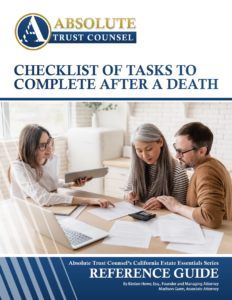
Checklist of Tasks to Complete After A Death
Our list of what to do when someone dies will help you get organized with ease during the hardest period of time. It’s yours FREE.
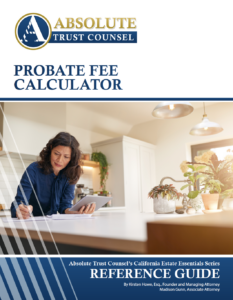
Probate Fee Calculator
OFacing Probate? Learn how to calculate your personalized probate fees based on individual estate size.
Podcasts

Absolute Trust Talk Ep. 40:
How to Avoid the Most Common Estate Planning Mistake
Absolute Trust Talk Ep. 44:
Estate Administration: Executor & Trustee Dos & Don’ts
Videos
Blogs
- Avoid Probate of Your CCRC Refund
- Expedient Probate Requires an Efficient Accounting
- Executor Fees for a Probate Case
- How to Avoid Probate
- How Much Does Probate Cost?
- How To Avoid Probate
- Issues with Probate – Part V
- Issues with Probate – Part IV
- Issues with Probate – Part III
- Issues with Probate – Part I
- Mortgage Loans to Irrevocable Trusts and Probate Estates
- One Cost of Probate: Calculation of Probate Fees
- Probate Takes Time
- Probate Requires a Diligent Executor
- Probate
- There is Little Drama in Probate Court!